Blog

  • Reading list and archives

    Our Exiled NDNZ Reading List & Archive: Tracing a Modern Indigenous Legacy

    If you’ve ever tried explaining to someone that you’re building a digital library while nursing an oat flat white in a packed London café, you’ll know it’s a strange and beautiful contradiction. Our team has spent countless afternoons doing exactly that, huddled over laptops in spots like Monmouth Coffee Company, trading PDFs of rez fiction and debating the ethics of digital preservation. We’ve come to believe that archiving isn’t just a clerical task for modern-day Native Americans—it’s a radical act of self-definition. This page isn’t a dusty back catalogue destined to languish on a forgotten server. It’s a living, breathing library that we tend to constantly, pruning dead links and planting new seeds for the Exiled NDNZ community across the UK.

    Why We Built This Archive for Modern-Day Native Americans

    When Exiled NDNZ started, it wasn’t a website. It was a loose constellation of diaspora creatives trying to find each other in a city that often conflates Indigenous identity with a historical footnote. We needed a permanent home, a place where our conversations wouldn’t vanish under the weight of an algorithm or a deleted group chat. Digital erasure isn’t an abstract threat for modern-day Native Americans; it’s the slow disappearance of nuance, the flattening of our artistic legacy into a single, static stereotype. We built this archive to push back, to anchor our presence on a platform we control, ensuring that the stories we share remain accessible whether you’re reading in Kentish Town or Kent.

    The Urgency of Digital Preservation

    We’ve watched entire Tumblr blogs dedicated to Indigenous art criticism disappear overnight. We’ve seen vital Twitter threads on repatriation get suspended without explanation. For a dispersed community, losing a digital hub feels like losing a physical gathering place. Our urgency comes from knowing that if we don’t capture the essays, the exhibition reviews, and the raw Instagram live critiques, the record of our contemporary movement in the UK simply won’t exist. We aren’t just saving files; we are actively building the primary source material that future generations will need to understand how we lived and created right now.

    From Private Group Chats to Public Legacy

    The intimacy of a WhatsApp group is hard to replicate, but the knowledge shared there shouldn’t stay locked behind a phone screen. Long before we had a proper domain, our team circulated reading lists in direct messages. We’d pass around scans of out-of-print catalogues from Native artists who had shown in Europe, or we’d argue about a specific passage in a novel well past midnight. Turning that private chatter into a public legacy felt vulnerable, but we realised that gatekeeping these resources contradicted our mission. This archive is essentially the group chat matured, organised, and opened up for anyone needing a starting point.

    Essential Books by Contemporary Native Voices

    Our editorial voice doesn’t emerge from a vacuum. It’s forged in the pages of books we physically hand to each other, spines cracked and margins scribbled in. When we talk about the modern Indigenous experience, we’re standing on a foundation built by storytellers who translate the chaos of our reality into sharp, unforgettable prose. These texts aren’t just recommendations; they are the lenses through which we view our own work at Exiled NDNZ, shaping how we critique art and how we understand our place in the UK landscape.

    Fiction That Redefines the Rez

    You cannot understand our team’s conversations without understanding the impact of Tommy Orange’s There There. We passed a single battered copy around so many times that it eventually disintegrated near Borough Market. That novel cracked open the concept of the urban Native experience in a way that resonated deeply with those of us navigating London’s concrete maze. We also constantly return to the sharp, haunting short stories of Stephen Graham Jones and the visceral family sagas of Louise Erdrich, all of which dismantle the idea that Native fiction belongs strictly to a rural past.

    Poetry and Theory We Keep Returning To

    When we need to remember why we do this, we read Joy Harjo. Her poetry functions as a true north for our editorial compass, blending the historical with the cosmic in a way that makes the political feel deeply personal. Alongside Harjo, we keep the theoretical work of Glen Sean Coulthard and Leanne Betasamosake Simpson close at hand. Their critiques of colonial recognition politics give us the vocabulary to interrogate how Indigenous art is framed in British institutions, pushing us to ask harder questions about who holds the power to contextualise our work.

    Visual Art & Photography Books That Inspire Us

    We are visual people first. Long before we write a single word, we’re looking. The monographs and catalogues stacked on our shelves in London flats serve as a visual counterweight to the Eurocentric art history we were often fed in school. These books teach us how to see beyond the colonial gaze, offering a blueprint for how to document our communities with agency, humour, and a healthy dose of defiance. They inspire the aesthetic direction of our own digital presence and inform the visual literacy we try to cultivate in our readers.

    Challenging the Colonial Lens

    Wendy Red Star’s work is a masterclass in this reclamation. Her photographic self-portraits and interventions into archival images use bold colour and biting satire to talk back to the anthropologist’s camera. We spend hours dissecting how she layers humour over historical trauma without diminishing either. Similarly, Cannupa Hanska Luger’s documentation of his large-scale installations and community actions shows us how to provoke without performing damage. His work reminds us that contemporary Indigenous art can be monumental, messy, and futuristic, refusing the quiet, minimal boxes Western galleries often try to place us in.

    Our Favourite Exhibition Catalogues from Tate Modern

    We still talk about the catalogue from the Soul of a Nation era, but more recently, Tate Modern’s engagement with global Indigenous practices has provided vital physical artefacts for our archive. While we maintain a critical eye on institutional framing, we can’t deny the value of a well-produced monograph that captures the scale of an artist’s vision. Whenever a major institution highlights a contemporary Indigenous artist, we scramble to secure the catalogue not just as a souvenir, but as a record of that moment in the ongoing dialogue between our communities and the British art establishment.

    Deep Dives into UK & Indigenous Intersections

    Living in the UK as modern-day Native Americans means constantly navigating a layered and often uncomfortable shared history. We don’t exist in a bubble; we walk streets that have been tied to Turtle Island for over four centuries. Unpacking these connections is essential to understanding the legacy we are building here. It’s not about validating the colonial project, but about acknowledging the complex, and frequently tragic, intersections that have brought Indigenous bodies and artefacts to this soil, often against their will.

    Gravesend, St. George’s Church, and the Pocahontas Legacy

    One of the most surreal and sobering sites we visit is St. George’s Church in Gravesend, Kent. Standing before the Pocahontas statue and contemplating her burial site forces a reckoning with the earliest moments of this transatlantic exchange. She wasn’t a tourist; she died here, far from her homeland, and her legacy has been heavily romanticised by British folklore. For our team, visiting Gravesend is a pilgrimage that strips away the Disney myth and reminds us of the real human cost embedded in the history of Native American travel to the UK. It grounds our work in a solemn reality that contrasts sharply with the vibrant creativity we usually celebrate.

    Navigating the British Museum’s Indigenous Collections

    Walking into the British Museum is a conflicting experience for us. The Native American art and artefacts housed there, from ancient textiles to ceremonial objects, are breathtaking in their craftsmanship, yet their presence is a constant, painful reminder of extraction. We guide our readers to look critically at these displays, to question the placards, and to see the living cultures behind the glass. Similarly, we direct serious researchers toward the collections at the Pitt Rivers Museum in Oxford, which holds a vast and deeply complex array of Indigenous material culture. We believe in using these collections as sites of study and critique, rather than passive viewing.

    Playlists, Podcasts, and Audio Storytelling

    Legacy isn’t just visual or textual; it vibrates through sound waves. Our team is just as likely to bond over a shared playlist as we are over a book. Audio carries an immediacy and an intimacy that bridges the gap between our London base and the homelands. Whether it’s the crackle of a rez radio voice or the heavy bass drop of a powwow step remix, the auditory side of our archive captures the rhythm of modern Indigenous life in a way that static text often misses.

    Podcasts That Feel Like a Kitchen Table Talk

    We are devoted listeners of the Media Indigena podcast. It’s the roundtable discussion we wish we were sitting in on, dissecting current affairs with a sharp, Indigenous-centred wit that never pulls its punches. It feels like a kitchen table talk where everyone is too smart, too funny, and too honest for mainstream media. We archive and reference episodes frequently because they model exactly the kind of fearless, nuanced conversation we want to foster within the Exiled NDNZ community.

    Music Blending Powwow and UK Bass Culture

    The presence of A Tribe Called Red, now The Halluci Nation, in London’s music scene was a watershed moment for many of us. Seeing a crowd in Brixton or Shoreditch lose themselves to a mix of pounding powwow drums and heavy UK bass culture was a revelation. It proved that our sonic traditions don’t just survive in the diaspora; they evolve into something entirely new and electrifying. Their albums are permanent fixtures in our archive, representing the perfect synthesis of Indigenous rhythm and urban electronic rebellion that defines so much of our aesthetic.

    How We Curate the Exiled NDNZ Legacy

    Maintaining this archive isn’t a passive act of hoarding. It requires a rigorous, sometimes exhausting, curatorial process. We are building a legacy for a community that has been misrepresented for centuries, so we take the responsibility of fact-checking and contextualising extremely seriously. This isn’t about amassing a massive quantity of links; it’s about cultivating a trusted space where our readers know the information has been vetted through a specific, community-focused lens. We pull back the curtain here to show you how we decide what makes the cut.

    Our Vetting Process for Community Accuracy

    Every resource we include goes through a verification process that prioritises Indigenous sources. We cross-reference claims with tribal historians, primary documents, and established Native-led media outlets. We often find ourselves cross-checking historical data against the detailed records and recommendations sourced by institutions like the Pitt Rivers Museum in Oxford, while applying a critical lens to the museum’s own framing. Our process involves a lot of late-night messaging, asking elders or subject matter experts for clarity, ensuring we aren’t perpetuating a colonial misinterpretation by accident.

    What We Refuse to Archive (And Why)

    We are not a neutral repository, and we refuse to archive material that violates our core ethics. We deliberately exclude:

    • Ceremonial knowledge never meant for public consumption: If it’s sacred and secret, it has no place on a website.
    • Content by pretendians or fraudulent voices: We actively verify claimed affiliations and refuse to platform individuals who have been identified by their communities as dishonest about their heritage.
    • Exploitative journalism: Pieces that traffic in trauma without consent, or that frame our communities as helpless relics, are not welcome here.

    This selectivity is not censorship; it is a boundary. Our legacy cannot be built on the same extractive practices that harmed our ancestors.

    We see this archive as a collaborative dialogue with our UK readers. It is not a static monument to a frozen past, but a dynamic, evolving conversation that grows with every new book we discover, every exhibition we critique, and every song that moves us. The legacy of Exiled NDNZ lives in the gaps between these resources, in the discussions they spark, and in the community they help to build. Keep reading, keep listening, and keep talking back to us—this library is yours as much as it is ours.

    FAQ

    Do you only archive content created by modern-day Native Americans?

    Our primary focus is elevating Indigenous voices and creators, but we occasionally include non-Native resources if they provide essential critical context or archival value that directly supports our community’s understanding. However, we always clearly label the source and apply a critical lens to non-Indigenous perspectives.

    How can I suggest a book or podcast for the Exiled NDNZ archive?

    We actively welcome suggestions from the community. You can reach out through our contact channels with the title and a brief note on why it resonates with you. Our team reviews every submission, though we only include items that align with our curatorial values and pass our vetting process for accuracy and authenticity.

    Why does the archive include UK institutions like the British Museum if they hold contested artefacts?

    We include them because they are a reality of the landscape we navigate as modern-day Native Americans living in the UK. Ignoring their existence doesn’t help our community. We provide context for engaging with these spaces critically, encouraging readers to understand the history of extraction while studying the art and artefacts housed there.

    Is the Pocahontas memorial in Gravesend actually a burial site?

    Yes, St. George’s Church in Gravesend, Kent, is widely recognised as the burial site of Pocahontas, who died there in 1617. A statue commemorates her legacy, though we encourage visitors to approach the site with a critical understanding of how her story has been romanticised and separated from the harsh realities of colonial history.

  • Museums and repatriation: current debates

    Museums and Repatriation: The Current Debates Defining Modern-Day Native American Legacy

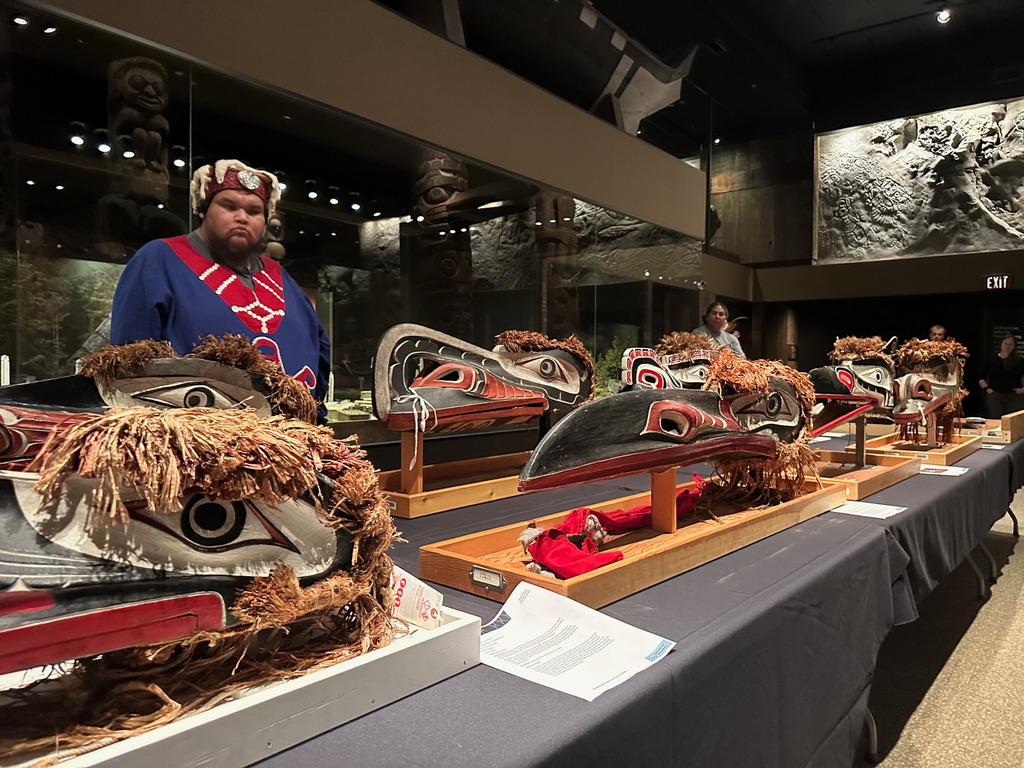
    We stood in the North American gallery of the British Museum last autumn, a group of Exiled NDNZ artists and researchers huddled near a display of ceremonial regalia from the Great Plains. The lighting was immaculate, the climate control perfectly calibrated, yet the air felt heavy, stagnant. We watched visitors shuffle past, glancing at beaded moccasins and sacred bundles with the same detached curiosity they’d offer a Roman vase. One of our team members placed her hand on the glass, not to admire the craftsmanship, but to silently acknowledge the object inside. It was not a relic to us. It was a relative. That moment crystallised the question that haunts every conversation we have about modern-day Native Americans and legacy: who truly holds the keys to our past, and at what cost do we allow them to keep the locks?

    The Shifting Ground: Why Repatriation Dominates Museum Conversations

    Across the United Kingdom, the ground beneath museum floors is trembling. Institutions that once presented themselves as neutral guardians of world heritage now find themselves at the centre of a moral reckoning. The debate is no longer confined to academic symposia or activist circles; it has spilled into newspaper headlines, government reports, and public consciousness. Global pressure mounts daily for institutions like the British Museum and the Victoria and Albert Museum to re-examine their colonial-era acquisitions with fresh eyes and honest hearts.

    The catalyst for much of this shift came from across the Channel. The Sarr-Savoy report, commissioned by French President Emmanuel Macron in 2018, sent shockwaves through European museums by boldly declaring that African heritage must be returned to Africa. While the report focused primarily on sub-Saharan collections, its philosophical foundations resonated deeply with Indigenous communities worldwide, including ours. It articulated what modern-day Native Americans have argued for generations: that objects acquired under conditions of duress, violence, or profound power imbalance cannot be considered legitimate holdings. The report’s ripple effects reached British shores, emboldening repatriation advocates and unsettling curatorial complacency.

    From Quiet Diplomacy to Public Demand

    We have watched the strategy shift dramatically over the past decade. Previously, repatriation requests moved through hushed diplomatic channels, often taking decades and yielding little more than polite refusals. Today, Indigenous communities are no longer asking quietly. Social media campaigns, documentary films, and direct public appeals have transformed repatriation into a matter of public accountability. Museums can no longer hide behind closed boardroom doors when thousands of people are watching their every move online. For Exiled NDNZ, this visibility is both empowering and exhausting; we celebrate the momentum while acknowledging the emotional toll of constantly justifying our right to our own heritage.

    The British Museum Act 1963: The Legal Fortress

    Yet for all the public pressure, a formidable legal barrier remains entrenched in British law. The British Museum Act 1963 explicitly prohibits the institution from permanently removing objects from its collection except under extremely narrow circumstances. This legislation functions as a legal fortress, allowing trustees to deflect repatriation claims by pointing to statutory constraints rather than engaging with ethical arguments. We have sat in meetings where well-meaning curators express sympathy for our position while simultaneously explaining that their hands are tied by Parliament. The Act transforms what should be a moral conversation into a bureaucratic stalemate, protecting colonial loot behind the shield of modern legislation.

    Beyond the Glass Case: How Modern-Day Native Americans Define Theft vs. Care

    To understand why repatriation matters so profoundly to Exiled NDNZ and Indigenous communities across the globe, one must first grasp a fundamental conceptual difference. Western museums categorise objects by material, date, and geographic origin. We categorise them by relationship. The distinction between theft and care hinges not on legal title deeds but on whether an object is where it belongs, with whom it belongs, performing the duties it was created to perform.

    Living Beings, Not Artefacts

    Many of the items currently housed in UK institutions are not, from our perspective, inanimate artefacts at all. Ceremonial pipes, medicine bundles, certain masks, and sacred regalia are understood within our traditions as living beings with agency, purpose, and spiritual responsibilities. The concept of inalienable possession is central here: some objects cannot be sold, traded, or given away because their ownership is not vested in any individual human but in the community, the clan, or the spiritual entity they serve. No colonial administrator, no missionary collector, no well-intentioned anthropologist ever had the authority to transfer ownership of these beings. The transaction was void from its inception, regardless of what receipts might suggest.

    The Spiritual Cost of Displaying the Sacred

    When ceremonial items are displayed out of context, behind glass, stripped of their ceremonial feeding, singing, and seasonal rituals, the distress is not merely emotional but spiritual. Our team includes knowledge keepers who have walked through gallery after gallery, feeling what they describe as a profound wrongness emanating from certain display cases. These objects were never meant to be static exhibits. They were meant to move, to breathe, to participate in the life of the community. Their imprisonment in climate-controlled cabinets represents a wound that continues to fester across generations. This is not metaphorical language to us; it is the literal truth of our lived spiritual reality.

    Digital Ghosts: Can 3D Repatriation Preserve Legacy Without Physical Return?

    In recent years, a seductive technological solution has emerged from university laboratories and museum conservation departments. Digital repatriation, using photogrammetry and 3D scanning to create high-resolution replicas of contested objects, promises a compromise that allows museums to retain originals while communities receive digital copies. Several UK universities have invested heavily in these projects, presenting them as innovative bridges between competing claims. We approach this trend with deep ambivalence.

    The Promise and Limits of Photogrammetry

    We acknowledge the genuine potential of digital technologies. A high-resolution scan of a Tlingit totem pole, for instance, can provide carvers with precise dimensional data to inform the creation of new poles, reviving artistic techniques that colonisation attempted to erase. Digital archives can make imagery accessible to community members who cannot travel to distant museums. These are real benefits, and we do not dismiss them lightly. The Pitt Rivers Museum in Oxford has engaged in thoughtful ethical review processes around its collections, exploring digital access as one component of broader accountability. However, the promise of technology must not become a convenient escape hatch from harder conversations about physical return.

    Why a Hologram Cannot Hold a Ceremony

    Let us be unequivocal: a hologram cannot hold a ceremony. A 3D-printed replica cannot receive offerings, cannot be fed, cannot dance. The digital reproduction captures surface geometry but misses entirely the spiritual essence that makes an object what it truly is. When we hear curators suggest that a community should be satisfied with a scan while the museum retains the original, we recognise a sophisticated form of curatorial guilt management. The digital ghost becomes a way for institutions to appear progressive while maintaining physical possession. For Exiled NDNZ, this is not repatriation; it is a high-tech consolation prize that fundamentally misunderstands what we are asking for.

    The ‘Universal Museum’ Fallacy: A Colonial Hangover We Must Challenge

    Perhaps no argument has done more to obstruct meaningful repatriation than the notion of the universal museum. This idea, that certain institutions hold collections so encyclopaedic and globally significant that they transcend national and cultural boundaries, has been wielded as a rhetorical weapon against return claims for decades.

    Deconstructing the 2002 Declaration

    In 2002, a group of major museums, including several British heavyweights, signed the Declaration on the Importance and Value of Universal Museums. The document argued that objects acquired long ago had become part of the heritage of all humanity and should remain in their current locations for the benefit of global audiences. Reading this declaration today, we are struck by its breathtaking paternalism. It presumes that source communities are incapable of caring for their own heritage, that Western museum standards represent the only valid form of preservation, and that a visitor in London has a greater right to encounter our sacred objects than our own grandchildren do. The declaration is not a neutral statement of museological principle; it is a colonial hangover dressed in the language of cosmopolitan benevolence.

    Case Study: How Glasgow Life Set a Precedent

    Fortunately, not all UK institutions have clung to this outdated framework. In 1999, Glasgow Life, the organisation managing Glasgow’s civic museums, made history by returning a Lakota Ghost Dance shirt to the descendants of those who had been massacred at Wounded Knee. The shirt, stained with what is believed to be the blood of a Lakota person killed in the 1890 massacre, had been in Glasgow’s collection for over a century. The return was not legally compelled; it was ethically chosen. Glasgow’s decision demonstrated that repatriation is possible within UK frameworks when institutional will exists. For Exiled NDNZ, this precedent remains a beacon of what can be achieved when museums prioritise humanity over possession.

    Co-Curation or Co-Optation? The New Wave of Museum Collaboration

    The latest trend in museum practice involves inviting Indigenous advisors, artists, and community members to collaborate on exhibitions. These co-curation projects are promoted as evidence of institutional transformation, proof that museums are finally listening. We participate in some of these initiatives ourselves, and we hold complex feelings about their value.

    When Consultation Becomes a Checkbox

    Too often, consultation becomes a checkbox exercise. A museum invites a Native advisor to review label copy or suggest paint colours for a gallery wall, then claims Indigenous endorsement for an exhibition that fundamentally misrepresents our cultures. The emotional labour falls on us; the prestige and gatekeeping power remains with the institution. We have experienced situations where our advice was solicited, noted, and then ignored when it conflicted with curatorial vision. This is not collaboration; it is co-optation dressed in progressive language.

    Genuine Power-Sharing vs. Performative Allyship

    Genuine power-sharing requires museums to relinquish control, not just invite input. It means allowing Indigenous communities to decide which objects can be displayed, how they are interpreted, and whether they should be displayed at all. It means paying Indigenous knowledge holders at the same rates as academic consultants. It means accepting that some answers will be “no,” and that “no” is a complete sentence requiring no justification. When an institution is willing to accept these terms, co-curation can be meaningful. When it is not, we are witnessing performative allyship that serves institutional reputation far more than it serves Indigenous communities.

    Healing the Future: What True Repatriation Looks Like for Our Team

    We want to paint a picture of what genuine repatriation could look like, not as an abstract ideal but as a practical vision grounded in relationship and responsibility. This vision moves beyond the adversarial framework of ownership disputes toward something more radical and more healing.

    From Permanent Collections to Cyclical Visits

    Imagine a museum that functions not as a permanent owner but as a temporary caretaker within a cycle of hospitality. Objects currently held in UK institutions could be returned to their home communities for ceremonial use, then travel back to the museum for periods of public education, then return home again. This model already exists in some Indigenous contexts, where sacred items circulate through networks of care rather than sitting static in storage. It requires museums to develop relationships of trust, to accept that they are part of an object’s journey rather than its final destination. For Exiled NDNZ, this cyclical model honours both the educational mission of museums and the spiritual needs of communities.

    Rebuilding Legacy Through the Act of Return

    The physical act of return carries profound significance beyond the object itself. When soil, songs, and sacred bundles come home, fractured legacies begin to heal. We have witnessed ceremonies where returned items are welcomed with tears, with feasting, with the reawakening of dormant rituals. These moments do not erase historical trauma, but they open pathways for repair that no museum display ever could. Repatriation is not about erasing history or emptying museum galleries. It is about rebuilding the living legacy that connects modern-day Native Americans to our ancestors and our future generations. It is about making museums live up to their own ethical promises, moving from defensive posturing to active participation in healing.

    The question we posed at the British Museum that autumn afternoon remains urgent. Who holds the keys to legacy? The answer is not simple, but the direction is clear. Legacy lives in relationship, in ceremony, in community, and in the land. Museums can be part of that legacy, but only if they are willing to loosen their grip on the keys.

    FAQ

    What does repatriation mean in the context of Native American cultural items?

    Repatriation refers to the process of returning cultural objects, human remains, and sacred items to the Indigenous communities from which they originated. For modern-day Native Americans, this is not simply about transferring legal ownership but about restoring spiritual relationships, healing historical wounds, and enabling ceremonial practices that have been disrupted by the removal of these items.

    Why can’t the British Museum simply return contested objects?

    The British Museum is governed by the British Museum Act 1963, which severely restricts the institution’s ability to permanently remove items from its collection. The Act permits disposal only under very limited circumstances, such as when objects are duplicates, damaged beyond repair, or deemed unfit for the collection. This legal framework creates significant obstacles to repatriation even when curators and trustees may be sympathetic to return claims.

    What was the significance of Glasgow returning the Ghost Dance shirt?

    In 1999, Glasgow Life returned a Lakota Ghost Dance shirt believed to have been taken from a victim of the 1890 Wounded Knee massacre. This return was significant because it demonstrated that UK institutions could ethically repatriate sacred items despite legal complexities. The Glasgow case remains a powerful precedent cited by repatriation advocates, showing that institutional will can overcome procedural barriers.

    Are digital copies an acceptable alternative to physical repatriation?

    From our perspective as Exiled NDNZ, digital copies and 3D scans are not sufficient substitutes for physical return. While digital technologies can support cultural revitalisation efforts, they cannot replicate the spiritual essence of sacred objects, nor can they participate in ceremonial life. A scan captures surface appearance but misses the living relationship that makes an object meaningful to its community.

    What does meaningful co-curation look like?

    Meaningful co-curation involves genuine power-sharing, not just consultation. It means Indigenous communities have decision-making authority over how their cultural heritage is displayed and interpreted, including the right to refuse display altogether. It requires equitable compensation for knowledge holders, transparent processes, and institutional willingness to accept community decisions even when they conflict with curatorial preferences.

  • Language revitalisation and visual art

    How Visual Art Fuels Language Revitalisation for Modern-Day Native Americans

    Standing before a massive canvas, you are confronted not by a quiet landscape, but by a riot of neon pink and electric blue. Layered over a graffiti-style background, bold, geometric characters spell out ᏣᎳᎩ ᎦᏬᏂᎯᏍᏗ—”I speak Cherokee.” The characters aren’t merely translated text; they are the central aesthetic event. The curves and sharp angles of the Sequoyah syllabary pulse with a rhythm that feels both ancient and entirely futuristic. This isn’t just a painting; it’s a defiant act of acoustic visibility. It forces us to ask a difficult question: when a language is no longer whispered in the home, can a canvas shout loudly enough to bring it back to life?

    Our Team’s View: Language Is More Than Words on a Canvas

    At Exiled NDNZ, we operate on a core belief that linguistic preservation is a purely visual act. For modern-day Native Americans, reclaiming the mother tongue isn’t solely about correct pronunciation or grammar drills; it is about visual sovereignty. When a language is endangered, the written form becomes a symbol of resistance. We see the written word as a distinct visual grammar that carries the weight of a worldview, not just a definition. When we look at the Cherokee syllabary, we don’t just see a system of communication invented by Sequoyah in the early 19th century—we see a design language so innovative that it single-handedly altered the trajectory of a nation’s literacy and, today, its contemporary pop art scene.

    The Syllabary as a Design Element

    Sequoyah’s invention is often framed historically, but we view it through the lens of modern graphic design. Each character possesses a unique symmetry and structural logic that rivals any Latin typeface. By integrating the syllabary into pop art—screen-printing it onto skateboards, embroidering it onto denim jackets, or splashing it across murals—artists remove the language from the dusty textbook. We believe that when a young person sees their ancestral tongue rendered in the same visual style as a Supreme logo or a Shepard Fairey poster, the psychological barrier breaks. It stops being a relic and becomes a living, breathing piece of street culture.

    Why ‘Legacy’ Means Visualising the Unspoken

    For our team, ‘legacy’ is a concept that is often trapped in the past tense. We aim to visualise the unspoken—the trauma, the humour, and the daily reality of rez life that English sometimes fails to capture. A visual legacy isn’t a static museum piece; it’s a dynamic conversation. By painting code-switching phrases or using syllabary to spell out modern slang, we are proving that the language can flex and evolve. This is how we ensure that the legacy we leave behind isn’t just a recording of a dying tongue, but a blueprint for a thriving, adaptable visual future.

    The Canvas as a Classroom for Modern-Day Native Americans

    Institutional education systems have historically been the site of linguistic genocide for Indigenous peoples, where boarding schools punished children for speaking their mother tongues. Today, modern-day Native Americans are circumventing these colonial academic structures entirely by turning the gallery wall and the city street into a classroom. The canvas offers a pedagogy free from state-sanctioned trauma. Artists are using bold text and vibrant patterns to teach vocabulary, creating an immersive learning environment where the viewer absorbs language through osmosis, seduced first by the colour and then by the meaning.

    Jeffrey Gibson’s Textile Wordplay

    We are constantly inspired by artists who weaponise beauty for education. Jeffrey Gibson, a Choctaw-Cherokee painter and sculptor, is a master of this. His work, which famously represented the United States at the 2024 Venice Biennale, is a masterclass in textual insistence. Gibson punches through the noise of the contemporary art world with wall hangings and punching bags emblazoned with poetic, declarative Indigenous phrases. When you read his textiles, you aren’t just observing a pattern; you’re learning a word, a sentiment, a prayer. His representation on the global stage at the Biennale was a watershed moment, signalling that these visual languages are not peripheral—they are central to the story of modern art.

    Bypassing Academia Through Street Art

    The rigid structures of academia often demand that Indigenous knowledge be filtered through a Western anthropological lens. Street art refuses this. We have seen powerful examples of artists wheat-pasting syllabary posters in urban alleys or projecting digital animations of spoken-word poetry onto the sides of buildings. This method bypasses the gatekeepers. The lesson reaches the kid on the skateboard, the elder on the bus, and the tourist snapping a photo. It turns the city into an unregulated, decolonised learning space where the visual form of the language is the only teacher you need.

    Decolonising Type: Fonts, Form, and Cultural Survival

    There is a technical revolution happening quietly behind the scenes of the art world. For a language to survive in the digital age, it must exist on the screen. For decades, many Indigenous languages were rendered as clumsy bitmaps or, worse, as empty boxes on a computer screen. Decolonising type involves the painstaking technical and cultural process of creating digital typefaces that honour the organic flow of a written script. This is not just data entry; it is a sacred act of ensuring that a language can text, tweet, and publish in the 21st century.

    From Oral Tradition to Digital Pixels

    The shift from oral tradition to digital pixels is fraught with design challenges. How do you capture the hand-sway of a brushstroke in a rigid vector file? How do you ensure the kerning respects the sacred geometry of a syllabary designed two hundred years ago? We see typographers working closely with elder language keepers to ensure that digital fonts don’t corrupt the visual integrity of the words. When a font is designed well, it unlocks a new realm of expression, allowing artists to use the language in graphic design software, creating everything from book covers to memes that keep the vocabulary circulating in the digital bloodstream.

    The Rise of Indigenous Typography in Global Galleries

    This painstaking work is finally being recognised in the highest echelons of the art world. International exhibitions, including recent iterations of the Venice Biennale, have showcased how Indigenous typography is a fine art. We are seeing massive installations where the typeface itself is the sculpture. This visibility validates what we have always known: that the visual form of an endangered language carries an emotional weight and conceptual depth that rivals any classical masterpiece. It is a celebration of survival rendered in Helvetica-level precision, but with a soul that no generic sans-serif can possess.

    Resonance in the UK: Connecting Indigenous Expression to British Conversations

    We often find that audiences in the United Kingdom possess a unique, intuitive understanding of our mission. The British Isles hold their own history of linguistic suppression and revival. The struggle to keep a language off the “extinct” list is not foreign here; it is a familiar, painful narrative. By drawing parallels between Native American language art and UK-based movements, we can build a transatlantic bridge of solidarity. The visual fight for Cornish or Welsh echoes the fight for Navajo or Cherokee, proving that language reclamation is a global human impulse, not a niche cultural quirk.

    Shared Struggles: Cornish, Welsh, and Navajo

    The story of the Cornish language (Kernewek) is a particularly poignant parallel for us. Having once been declared extinct, it has clawed its way back through grassroots activism and, crucially, visual and musical art. Just as we use the Cherokee syllabary in pop art to normalise its presence, Cornish revivalists are using bold graphic design to plaster the language across signage, beer labels, and album covers. Welsh, too, has survived the pressure of English dominance through a fierce commitment to visual media, from television to street signs. This mirrors the Navajo Nation’s efforts to keep their language visible in public spaces. It is a shared understanding that to be seen is to be remembered.

    Where to See Native Art in the United Kingdom

    The relationship between Native American art and British institutions runs deep. The Smithsonian National Museum of the American Indian has a rich history of past collaborations with the British Museum, bringing masterworks across the Atlantic. For those wanting to connect with the textual and oral traditions we champion, the ‘Native Voices’ exhibition history at the British Library in London remains a landmark moment. That exhibition explored the written and spoken word of Indigenous peoples, placing the syllabary and oral storytelling on the same revered pedestal as Shakespeare’s folios. These collaborations remind us that our visual legacy is welcomed and critically engaged with here in the UK.

    Why Modern-Day Native Americans Matter to a Global Legacy

    The world is often comfortable with the Native American as a ghost; a tragic, vanishing figure of the 19th century. We exist in the global imagination too often as a black-and-white photograph. Modern-day Native Americans are using contemporary art to shatter this trope with a sledgehammer. We are not preserving a culture in formaldehyde; we are building a future-facing legacy that demands international attention. Our art is loud, it’s confrontational, it’s playful, and it’s deeply intellectual. We matter to the global legacy precisely because we are not static—we are a living feedback loop between the ancient and the algorithm.

    Rejecting the Anthropological Gaze

    We actively reject the anthropological gaze that seeks to study us like specimens. That gaze wants a diorama; we give it a disco. Our art refuses to perform a sanitised, easily digestible version of “Indianness” for a white-walled gallery market. By engaging with global trends like glitch art, neon minimalism, and maximalist textile design, we assert that we are contemporaries of the global art scene, not its ancestors. When we place the syllabary in a context that feels like the future, we deny the viewer the comfortable distance of the past.

    Building a Future, Not Just Preserving a Past

    Preservation implies a certain fragility, a careful handling of something dead. We are not taxidermists. We are architects. Every time a digital typeface is created, or a street mural is unveiled, we are laying the foundation for a future where Indigenous languages are an unremarkable, ubiquitous part of the visual landscape. This is the legacy we speak of—not a sealed time capsule, but a contagious, evolving aesthetic that future generations will adapt in ways we cannot yet imagine. We are building a world where the next Sequoyah might invent a syllabary for the metaverse.

    We carry a heavy responsibility as artists and viewers. Every time we paint a word or read a character, we are pumping oxygen into the lungs of a language. It is a visceral, urgent act of love. For our team at Exiled NDNZ, this is not about creating a static record of a sad past, but about witnessing a living, evolving legacy that refuses to be silenced. The canvas listens, and it speaks back. We invite you to look, to read, and to keep the conversation going—not just with your eyes, but with your voice.

    Frequently Asked Questions

    Why is visual art so effective for language revitalisation?

    Visual art bypasses the trauma often associated with formal education. By presenting the Cherokee syllabary or other Indigenous words as a design element in pop art or street murals, we remove the pressure of “learning” and replace it with the seduction of aesthetics. It makes the language visible in everyday life, normalising its presence for a new generation.

    How did Jeffrey Gibson impact the visibility of Indigenous art?

    Jeffrey Gibson’s representation of the United States at the 2024 Venice Biennale was a monumental step for global visibility. His use of bold text and textile wordplay brought Indigenous language and aesthetics into the centre of the fine art conversation, proving that these visual languages are a vital part of contemporary art history, not a niche category.

    Are there connections between Native American language loss and UK languages?

    Absolutely. The revival status of the Cornish language (Kernewek) is a powerful parallel. Like many Native American languages, Cornish faced immense pressure and was once declared extinct. The visual and artistic revival movements in Cornwall share the same spirit as our work, using graphic design and public art to reclaim linguistic space.

    Where can I see Native American language art in the UK?

    Institutions like the British Museum and the British Library have historically showcased this work. The British Library’s ‘Native Voices’ exhibition was a seminal event that placed Indigenous oral and written traditions in a global context. Additionally, the Smithsonian National Museum of the American Indian’s past collaborations with the British Museum have brought significant works to London.

    Does creating digital typefaces really help save a language?

    Yes, it is critical for cultural survival. If a language cannot exist on a smartphone or computer, it is locked out of modern communication. Designing digital fonts for the Cherokee syllabary allows the language to be used in texting, social media, and graphic design, ensuring it thrives in the digital age rather than being left behind as a relic.

  • Curating with community consultation

    Curating with Community Consultation: Our Approach at Exiled NDNZ

    Last autumn, our team sat in a cramped South London flat, facing a curatorial dilemma that no postgraduate training had prepared us for. We had two conflicting accounts of a ceremonial object’s origin: a neatly catalogued museum record from the 1920s, and the quiet, unwavering testimony of a Lakota elder who had travelled from Standing Rock. The institution we were partnering with favoured the written archive. The elder simply said, “My grandmother told me where it came from, and she was there.” In that moment, we had to decide what kind of curatorial practice we were building—one that polices knowledge through colonial paperwork, or one that trusts the living community it claims to serve. We chose the elder. That choice defines everything about how Exiled NDNZ operates.

    Why ‘Nothing About Us Without Us’ Is a Curatorial Baseline, Not a Buzzword

    The phrase originated in disability rights activism, but its migration into Indigenous curation has been profound and non-negotiable. For our team, it is the structural principle that determines whether a project proceeds or stops. The Sarr-Savoy Report on the restitution of African cultural heritage sent shockwaves through European museums and directly influences decolonial practices in UK institutions today. Its core argument—that communities must be centred in decisions about their own cultural patrimony—mirrors what Indigenous curators have demanded for generations.

    We have watched major UK institutions scramble to retrofit consultation into their workflows. The Horniman Museum’s return of the Benin Bronzes and sacred Wampum belts sets a UK precedent, proving that repatriation is not theoretical hand-wringing but a practical, achievable commitment. When the Horniman transferred ownership of 72 objects back to Nigeria, they did it publicly, with community representatives in the room. We are paying attention to that transparency—it tells us who is serious and who is performing.

    When Exiled NDNZ develops an exhibition, community members hold co-authorship status. They shape interpretive text, veto extractive framing, and retain the right to pull contributions if the context shifts. Operating in the UK, we are not legally bound by NAGPRA, the 1990 US federal law requiring the return of Native American cultural items and remains. But we treat it as a moral floor, not a ceiling. NAGPRA’s framework—requiring institutions to inventory holdings, consult with lineal descendants, and facilitate repatriation—shapes our internal protocols even when British law does not compel it.

    Identifying the Real Stakeholders in Modern-Day Native Narratives

    Mapping who speaks for a community is fraught terrain. Contemporary Native identity is layered, contested, and shaped by histories of displacement that federal recognition systems only partially capture. Our team distinguishes between federally recognised nations and urban inter-tribal collectives, where Indigenous people disconnected from reservation life build new forms of cultural continuity. Both are legitimate. In the UK context, we work closely with Natives in Britain, a grassroots collective amplifying modern Indigenous voices. Their membership spans Cherokee, Cree, Diné, and dozens of other nations.

    We intentionally seek out youth perspectives and Two-Spirit relatives whose roles in ceremonial life were violently suppressed by colonial gender regimes. Last year, we curated a digital showcase of queer Indigenous photographers. We did not route approval through a council; we built a peer-review circle of Two-Spirit artists who set their own terms. Blood quantum remains a painful fault line. In urban spaces, we encounter Natives who are culturally active but administratively unrecognised. Our team does not police identity through blood quantum thresholds. We assess stakeholdership through cultural participation, community accountability, and kinship ties.

    Our Team’s Toolkit for Building Reciprocal Trust

    Trust is built through transparent protocols that communities can hold us accountable to. Our standard practice begins with a Memorandum of Understanding co-drafted with community partners. These documents specify intellectual property rights, financial compensation, withdrawal procedures, and the scope of cultural knowledge we are authorised to share. The Pitt Rivers Museum in Oxford is actively re-evaluating its displays through Indigenous consultation, and their Labelling Matters project has modelled the transparency we advocate for across the sector.

    Every storyteller we work with signs an agreement granting them the right to withdraw their testimony at any point, up to and including post-publication. If an elder decides the context has shifted, we pull the material. We also pay every storyteller, consultant, and cultural advisor at professional rates. The notion that Indigenous knowledge holders should donate their labour for visibility is colonial logic dressed in arts-sector jargon. Our budgets treat community compensation as a fixed line item, not a negotiable afterthought.

    When Legacy Collides with Pain: Handling Traumatic Source Material

    Curating boarding school survivor art means sitting with material that carries profound, unresolved grief. The US and Canadian Indian boarding school system produced generations of trauma that ripple through families today. When we hosted screenings of the documentary Dawnland, we structured viewing spaces with trauma-informed care at the centre. That meant trained support staff on site, content warnings co-written with survivors, quiet decompression areas, and no expectation that Native attendees would serve as on-the-spot commentators for non-Native audiences.

    Every exhibition engaging traumatic material requires a cultural safety plan. We map potential triggers, train front-of-house staff in basic trauma awareness, and design the physical layout to offer exit routes and quiet corners. The exhibition does not end when the visitor leaves. We compile resource sheets connecting audiences to Native-led wellness organisations and the Native and Indigenous Therapists Directory. This is a continuation of our duty of care beyond the physical exhibition timeline.

    Digitising Ceremony Without Stripping the Sacred

    Digital access presents a paradox: it can democratise knowledge or flatten sacred protocols into consumable content. The Wellcome Collection’s closure of The Medicine Man gallery reflected a direct response to critiques on colonial curation. Their reckoning informs our caution around digital representation. Not everything belongs online. When a Māori practitioner explained that certain karakia lose their power when separated from the living breath of the speaker, we understood that digitisation can be a form of desecration even when the intention is preservation.

    We are developing custom metadata tags that flag items with access restrictions, seasonal sensitivities, or gender-based protocols. We have also adopted the concept of a digital smudge—a deliberate blurring or omission that signals a boundary. When sharing images of sacred objects online, we sometimes pixelate specific elements as a cultural acknowledgment that the full object is not meant for unmediated viewing. The screen is not a neutral window, and some things resist translation.

    Measuring the Ripple Effect: How Consultation Shapes Legacy

    Vanity metrics like visitor numbers and social media impressions tell us almost nothing about whether our work matters to communities. We track long-term relationship indicators instead: Are the same elders willing to work with us again? Do community members refer others to us? Our ongoing collaboration with the British Museum’s Indigenous Australia delegation models sustained rather than transactional partnership. The dominant museum model treats objects as assets to be lent and returned on schedule. Relational stewardship asks what ongoing responsibilities we carry toward the communities these objects came from. That might mean facilitating access visits, supporting repatriation claims, or maintaining communication long after a loan agreement expires.

    Legacy, for modern-day Native Americans, is not a bronze plaque on a wall. It is a living set of relationships that continues to demand attention, resources, and humility. For the Exiled NDNZ team, curatorial consultation is not a step in a workflow. It is a permanent, evolving relationship that defines the ethical backbone of everything we produce. We consult because the alternative is a curatorial practice built on extraction, and that legacy we refuse to inherit.

    Frequently Asked Questions

    • What does community consultation mean for Exiled NDNZ? It means involving Indigenous stakeholders as co-authors and decision-makers at every stage, from concept through post-exhibition evaluation. This includes shared MOUs, paid collaboration, and the right to withdraw contributions.
    • How does the Sarr-Savoy Report affect UK museum practices? The report has pushed institutions like the Horniman Museum to accelerate repatriation and embed consultation into governance. Its influence extends beyond African collections, shaping broader decolonial conversations across the sector.
    • Why does Exiled NDNZ pay storytellers? Paying storytellers and consultants at professional rates acknowledges the value of cultural expertise. We reject the expectation that Indigenous knowledge holders should donate their labour for visibility.
    • What is a digital smudge? A digital smudge is a deliberate blurring or omission applied to images of sacred objects shared online. It signals that certain elements are not meant for unmediated viewing and that some knowledge resists digitisation.
    • How do you handle traumatic historical material? We develop cultural safety plans including trauma-informed staff training, survivor-reviewed content warnings, quiet decompression spaces, and post-exhibition resource sheets connecting audiences to Native-led wellness services.

  • Contemporary Indigenous artists to know

    Essential Contemporary Indigenous Artists Redefining Modern Culture

    I remember standing in a cramped studio in Glasgow’s East End, watching an artist layer neon spray paint over a hand-tanned deer hide. The collision of aerosol and rawhide wasn’t just texture—it was a time machine. In that moment, our team understood that the legacy of Indigenous nations isn’t trapped in a dusty vitrine; it sweats, bleeds, and vibrates in real time. The artists we champion at Exiled NDNZ aren’t preserving a relic. They are proving that modern-day Native Americans are the most vital narrators of the now.

    Beyond the Archive: Why ‘Modern-Day Native Americans’ Matters

    There is a quiet violence in the past tense. When UK institutions frame Indigenous identity as a historical subject, they sever the lifeline between ancestral genius and contemporary relevance. The conversation around modern-day Native Americans isn’t about erasing history; it’s about dragging the anthropological gaze into the 21st century. We are dealing with living cultures that refuse to be pinned down like specimens. British broadcasting still reaches for the headdress and the horseback silhouette far too often. This lazy iconography perpetuates the myth of the ‘vanished race,’ a colonial fantasy that erases the urban Indigenous experience. When a UK documentary ignores the coder in Minneapolis or the DJ in Phoenix to focus solely on 19th-century battlefields, it commits a spiritual erasure. Visual sovereignty is the hard line. For too long, the shutter was controlled by outsiders. Today, Exiled NDNZ prioritises artists who seize the lens back, depicting joy, cyberpunk aesthetics, and rez dog glamour without performing trauma for a voyeuristic gaze.

    Visual Sovereignty: Artists Painting the Present Tense

    The canvas is a battleground where pop culture devours tradition and spits it out as something gloriously new. We are witnessing painters who grew up on comic books and ceremony merging the two with electric audacity. Indigenous digital natives wield photorealism to capture the gloss of a smartphone screen reflecting a beaded medallion, confronting the gallery-goer with a gaze that is unapologetically present—clad in Supreme hoodies but carrying the weight of ancient geometric design. On the flip side, abstraction allows the unspeakable to surface. Artists channel fragmented memory through visceral mark-making, using palettes drawn from the high desert—rust, sage, and blinding turquoise—smeared into forms that feel like a ceremony remembered in a dream. This is not decorative; it is a transmission of frequency.

    The Body as a Site of Resistance: Performance and Textiles

    Fabric wraps around history. When an artist adorns the body, they are armouring it for a present-day conflict. The resurgence of wearable art physically embodies the bridge between legacy and futurism. We are seeing a radical revival of traditional quillwork, a painstaking practice that nearly vanished, now merged with high fashion tailoring. Designers send models down catwalks in laser-cut felt and hand-harvested shell corsets, forcing the fashion elite to acknowledge that Indigenous design is not a costume but high art dictating its own price of entry. Performance pieces test the limits of the physical vessel. Artists engage in endurance art—hours of repetitive, gruelling movement—to embody the resilience of the modern warrior, connecting the physical toll of historical forced marches to the psychological stamina required to survive today’s institutional systems.

    Digital Warriors: New Media and Virtual Legacy

    The digital realm is the new frontier, and Indigenous creators are building the infrastructure. The assumption that Native people are technophobic is a racist anachronism; we have always been scientists and storytellers. The video game ‘Never Alone’ (Kisima Ingitchuna) proved that mechanics could be built on cultural values, challenging the colonial logic embedded in most gaming narratives. TikTok and Instagram have become the digital longhouse. Indigenous creators use AR filters to overlay traditional facial tattoos or place digital totems in urban bedrooms, collapsing distance so a teenager in Manchester can laugh at the same rez meme as a cousin in Oklahoma. This is the ‘Indigenous Futures’ initiative in action—a movement rejecting the sepia-toned past in favour of high-res, sovereign presence.

    The Curatorial Shift: Exhibiting ‘Native America’ in the UK

    London’s white cube galleries are sweating. The pressure to decolonise is a long-overdue audit. We see radical shifts in spaces that historically displayed us in cabinets. The British Museum holds over 2,000 Native artifacts now subject to intense repatriation dialogues, shifting from ‘if’ to ‘when.’ A recent solo exhibition at the Dulwich Picture Gallery signalled a crack in the old guard—treating the artist as an individual master, not an ethnographic sample. Curator Candice Hopkins (Carcross/Tagish) has fundamentally altered European perceptions, dismantling lazy romanticism and replacing it with sharp political critique, teaching audiences that our conceptualism is centuries old.

    Our Team’s Radar: How Exiled NDNZ Discovers New Talent

    Algorithms fail us. You cannot find soul through a search engine. Our vetting process relies on the whisper network, the underground pulse travelling through the diaspora. Key pillars of our approach include:

    • Unapologetic authenticity: We reject the ‘Native informant’ archetype. Artists we platform don’t translate their indigeneity for a white comfort zone. The work is dense with insider humour and specific tribal references. If a piece makes a room of settlers uncomfortable while making Natives laugh out loud, we’ve found the frequency.
    • Community-led trade networks: Robust word-of-mouth art trading connects Glasgow to the US Southwest. A beader in Santa Fe trades work for a print from a painter in Dennistoun, bypassing the commercial gallery system entirely. This moccasin telegraph for the digital age ensures art flows along community lines, not just capital lines.
    • Underground art swaps: The most electrifying work surfaces in spaces institutional curators wouldn’t dare enter. Bustling exchanges in cities like Manchester and Glasgow are where the real canon is rewritten over cups of tea and fry bread.

    Conclusion

    Legacy is not a static inheritance locked in a safety deposit box. It is a dynamic, living practice actively shaped right now in studios, on screens, and across the bodies of the diaspora. The modern-day Native American experience is a masterclass in adaptive resilience, a continuous thread woven into the future with neon yarn and fiber optics. The artists we celebrate at Exiled NDNZ are not just making art; they are building the world they want to inhabit, and we are lucky enough to witness it.

    FAQ

    Why is the phrase ‘modern-day Native Americans’ important?

    It actively counters the pervasive myth that Indigenous cultures are solely historical. Using ‘modern-day’ places us firmly in the present, acknowledging that we participate in contemporary art, technology, and politics while maintaining distinct cultural identities.

    How does Exiled NDNZ find artists outside of the US?

    We rely heavily on the diaspora grapevine. There are strong, word-of-mouth art trading networks connecting cities like Glasgow to the US Southwest. We monitor underground art swaps and community-led events rather than relying on mainstream commercial galleries.

    Is the British Museum returning Native American artifacts?

    The British Museum holds a historical collection of over 2,000 Native artifacts. While the institution faces immense pressure and ongoing repatriation dialogues, the process is complex and often slow. However, the global conversation has shifted decisively towards the ethical necessity of return.

    What is ‘Visual Sovereignty’?

    Visual Sovereignty is the right of Indigenous people to control their own image and narrative. It rejects the anthropological gaze and asserts the power to depict ourselves with complexity, humour, and modernity, without catering to external expectations or stereotypes.

  • Hello world!

    Welcome to WordPress. This is your first post. Edit or delete it, then start writing!